Many people all over the world are staying at home to combat the spread of COVID-19. While self-isolation might be a bit daunting, it’s also a great opportunity to catch up on your reading. To help pass the time, we are giving customers five free eBooks each week for four weeks. Read through this week’s options, add the eBook to your basket and use the code FREEBOOKS2 at checkout to get your free eBooks.

At the outbreak of World War II, only 111 Squadron and a handful of others were equipped with the Hurricane. Thanks to sudden massive orders and a well-organized Hawker sub-contracting production to Gloster and General Aircraft, more squadrons rapidly became operational. Cutting their teeth during the Battle of France, it was during the Battle of Britain that the type excelled and came to form the backbone of Fighter Command. While the Hurricane was steadily overtaken by the Spitfire in the fighter defence role, it remained the fighter of choice in North Africa and the Far East. Despite a large number being shot down in these far-flung conflicts, many received hasty repairs and returned to the fray while more fragile designs were permanently grounded. The Hurricane may not have been the prettiest or, the best-performing aircraft but, as Francis Mason stated: ‘The Royal Air Force was glad to get the Spitfire…it had to have the Hurricane!’

To commemorate the 2015 bicentenary of the Battle of Waterloo, one of the defining campaigns in European History, Osprey replaced its single volume Campaign title covering the whole of the battle with three highly detailed volumes. Based on new research drawn from unpublished first-hand accounts these volumes will provide a comprehensive resource for every aspect of the battle. The first of this trilogy details the battle of Quatre Bras where an initial 8,000 Allied troops faced 48,000 men of the French Armée du Nord under Marshal Ney. Realising his error, Wellington concentrated his troops at the strategic crossroads of Quatre Bras where they just managed to hold off Ney’s attacks. The battle ended in a tactical stalemate but, unable to link up with Blücher’s Prussians, Wellington retreated back along the road to Brussels to new positions at Waterloo. Featuring extensive photographs, full colour artworks, maps and bird’s-eye-views, this first instalment is not to be missed.

The Czech Legion was not just a single military unit, but a volunteer army that fielded up to 100,000 troops on the Allied side on all three main fronts of the war. Since only the defeat of Austro-Hungary and Germany offered any hope for Czech national independence, they were amongst the most motivated and steadfast of the Allied forces. After the Bolshevik Revolution, they fought their way across Russia, captured the Russian national gold reserves and used this as a bargaining chip to force the Bolsheviks to allow them to return home. Today the Legion is recognised as the founding fathers of Czech nationhood. This very colourful force of World War I has never before been detailed in English and is illustrated with an astonishing array of never-before-published photographs.

This title follows on from a companion book covering the US heavy cruisers that were built prior to the war, together forming the definitive guide to the US’s heavy cruiser classes. Versatile warships, the heavy cruisers of the Baltimore class, and their successors in the Oregon City and Des Moines classes, commonly acted as carrier escorts throughout World War II, but also performed bombardment duties in support of amphibious landings. Post-World War II, the heavy cruisers continued to see service, chiefly in Korea and Vietnam. Even after the heyday of the heavy cruiser had passed, the ships continued to serve – several were converted into the earliest examples of guided missile cruisers, and created an enduring legacy in the US Navy. From an established expert on the US and Pacific naval history, this is an invaluable resource richly illustrated with artwork and photographs.
WAR 7: Samurai 1550–1600 by Anthony J Bryant
Illustrated by Angus McBride

This title details the culture, weapons, armour and training of the elite samurai warrior class in the fascinating Age of Battles period (1550-1600). This was a period of vital importance not only because of the political effects of the chaos but also due to the changes in warfare that occurred. In 1542 the Portuguese introduced the matchlock musket into Japanese warfare, and this book traces the effect that this important innovation had on the samurai. Life outside the field of battle is also examined, making this an unmissable book for those interested in this brave warrior caste.
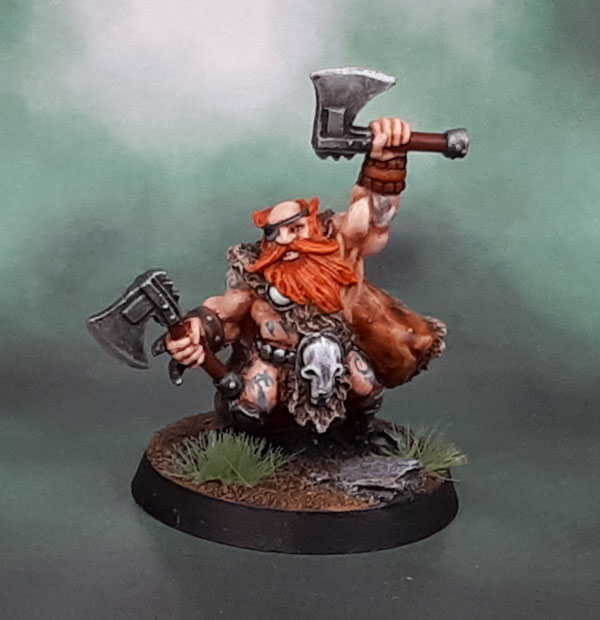
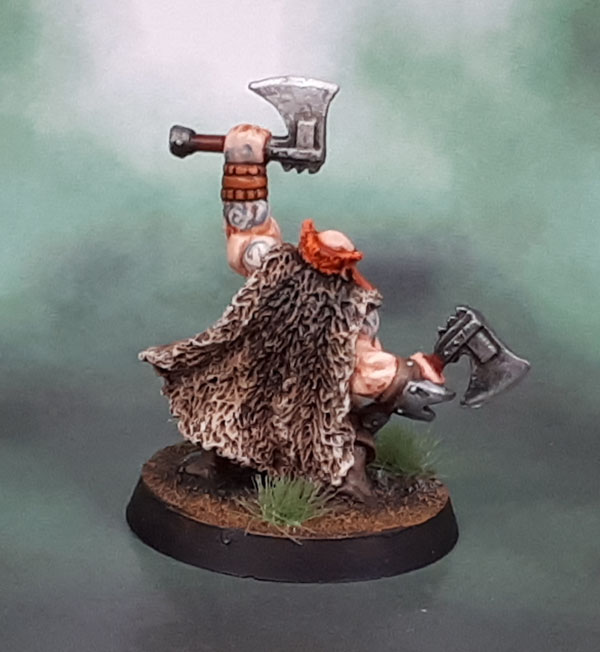
 Azazel's Bitz Box.