Mini-Review: Academy 1/48 Challenger Kit

While sitting and waiting for a doctor’s appointment several months ago, I was browsing Dakka on my phone when someone posted an eBay link to some 1:48 scale tanks, by a Korean company called Adademy. Since 1:48 is one of the appropriate scales for 28mm miniatures (some of our figures’ weird proportions are 1:35, some 1:48, some 1:56), I checked out the link, and on seeing the price of $15 a pop with free shipping, 5 minutes later, I’d ordered a platoon of three British Challengers to use in moderns or proxy into 40k, WarPath or any other games that might require tanks – particularly ones that look like they might actually work. I went with the challenger since it looks modern and pretty cool but isn’t as immediately recognisable as the US Abrams series (to those of us outside the UK, at least).
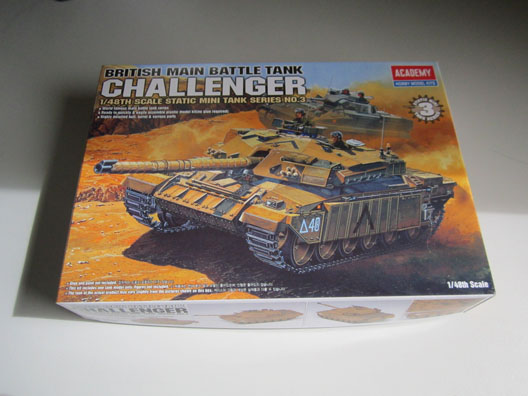
Sexy Box Picture
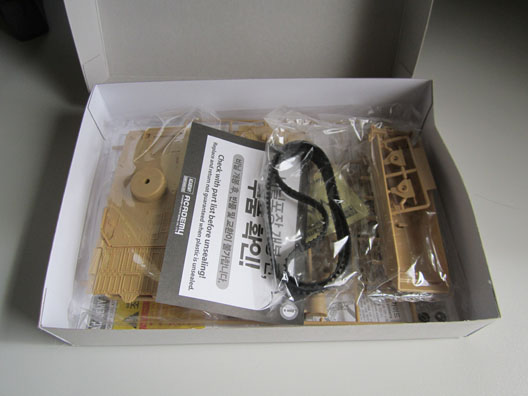
Open Box!
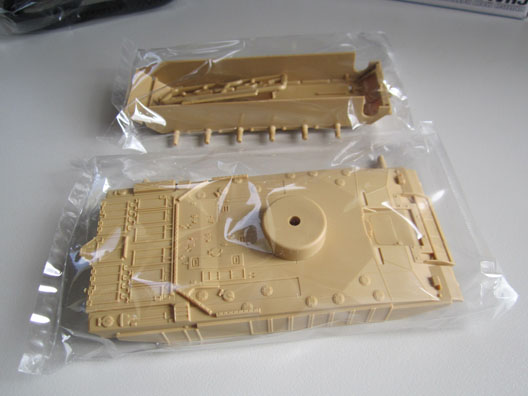
Hull/Chassis in-bag
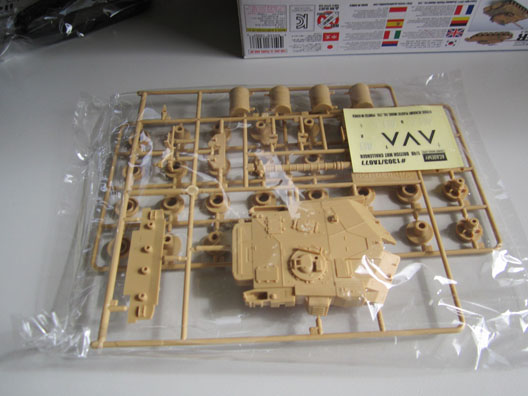
Turret, detail parts and road wheels.

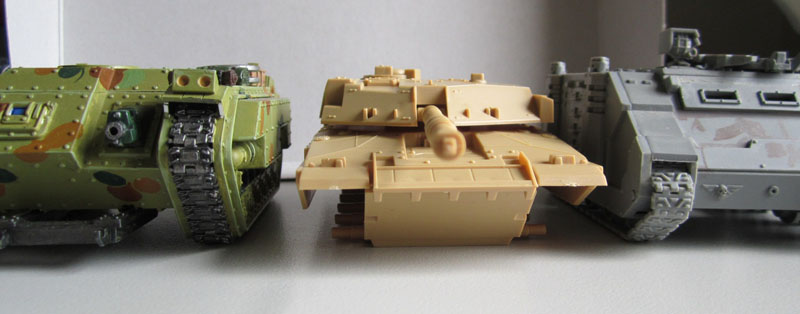
A couple of in-box and sprue-in bag shots. Nothing too exciting here. Tracks are rubbery plastic, as is not uncommon for tracked vehicle model kits. So far, so normal. I also took a bunch of comparison photos with some 40k models, so people can get an accurate look at the size. Bear in mind in these pics the wheels and tracks aren’t assembled on the Challenger, so the actual kit would end up a bit taller.
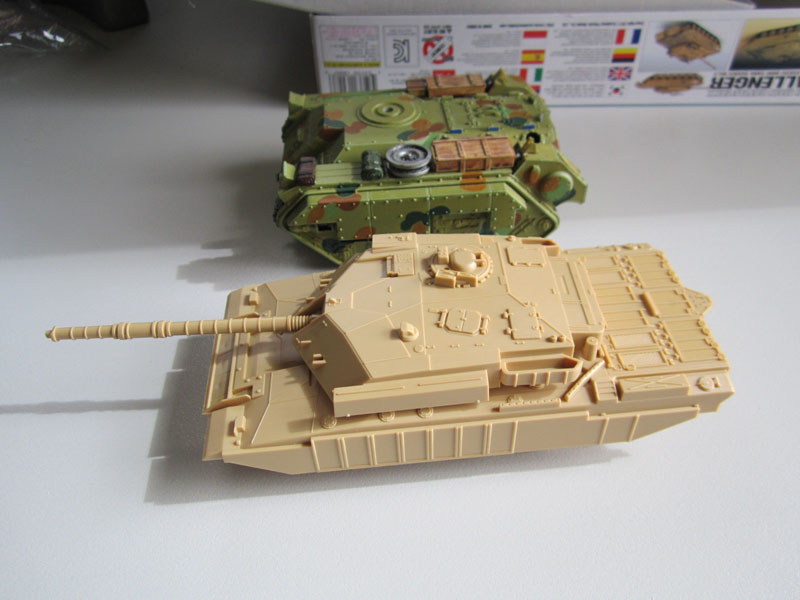
A nice amount of detail for the price.
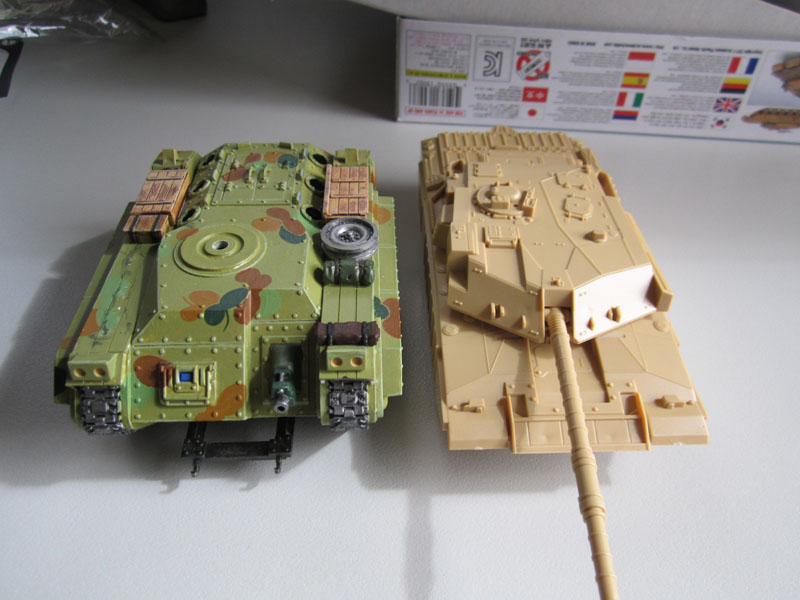
Front-on details.
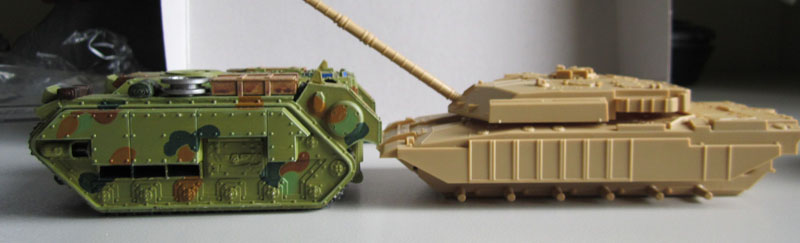
Profile with the Chimera.
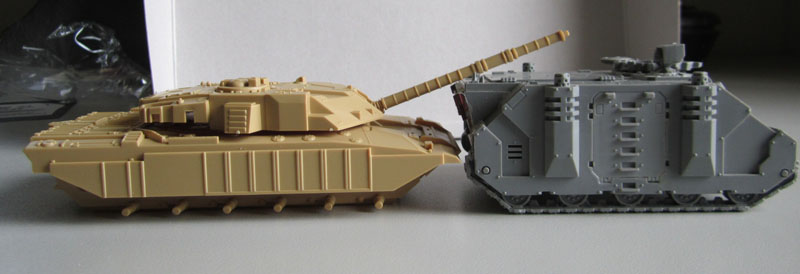
Profile with a Rhino.
Model’s-eye view, front on.
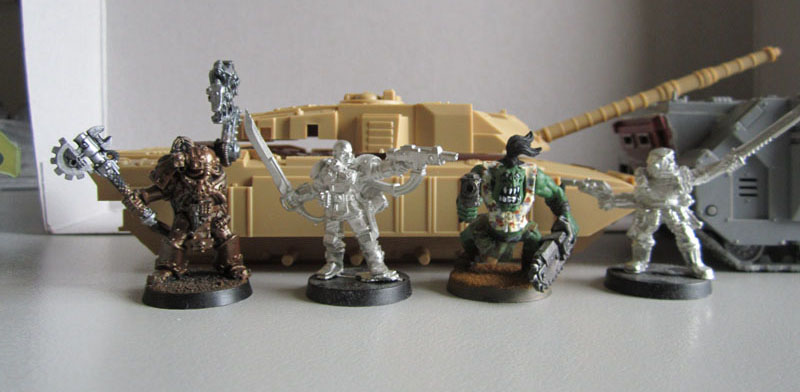
With: Techmarine, Cadian Stormtrooper, Ork Boy, Imperial Stormtrooper.
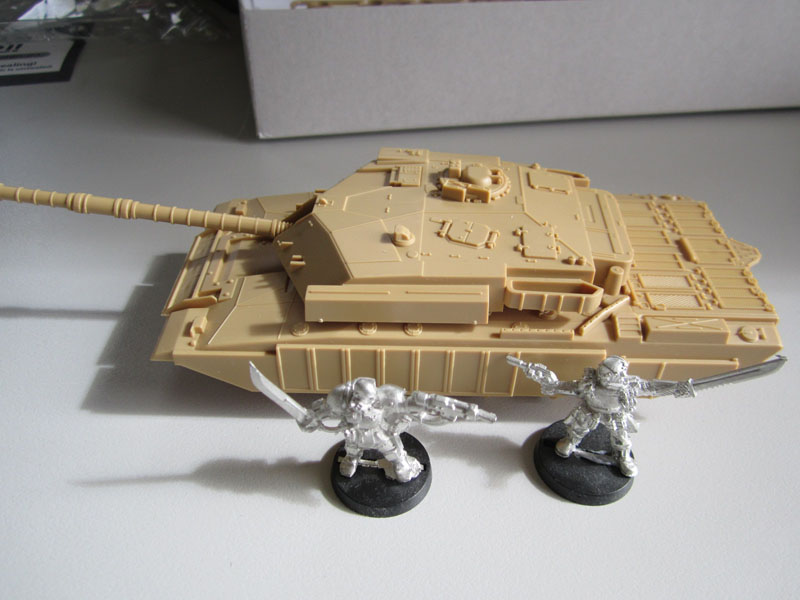
Gamers-eye-view, side-on with models.
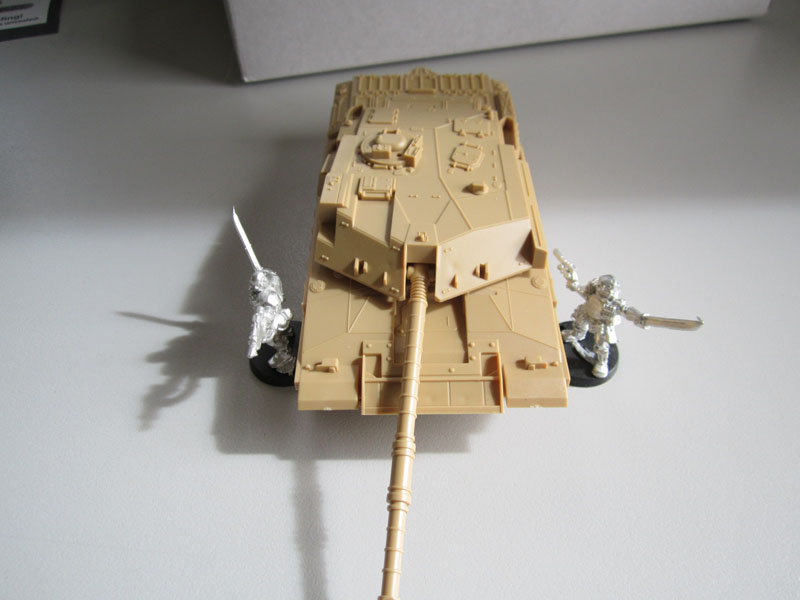
Gamers-eye-view, front-on with models.

Yes, I took a whole lot of photos. Mostly because I went with what I personally like to be able to see when looking at kits like this on the web, so some comparisons with other commonly-used vehicles (sorry, I couldn’t find my Russes) and some of the models most likely to be spending quality time with it (sorry, my Mantic Corporation guys aren’t built yet, and my half-painted moderns are still hiding out somewhere since  I moved).
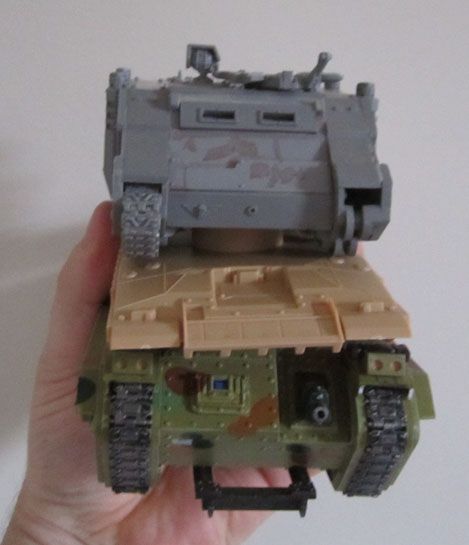
More direct width comparison.
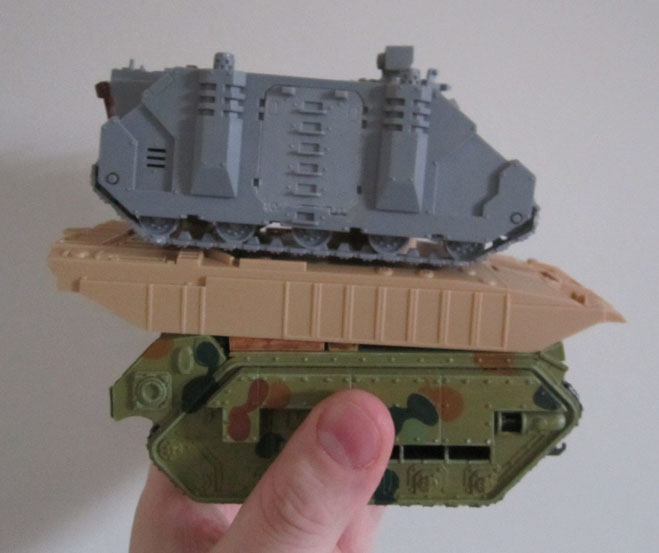
More direct length comparison.
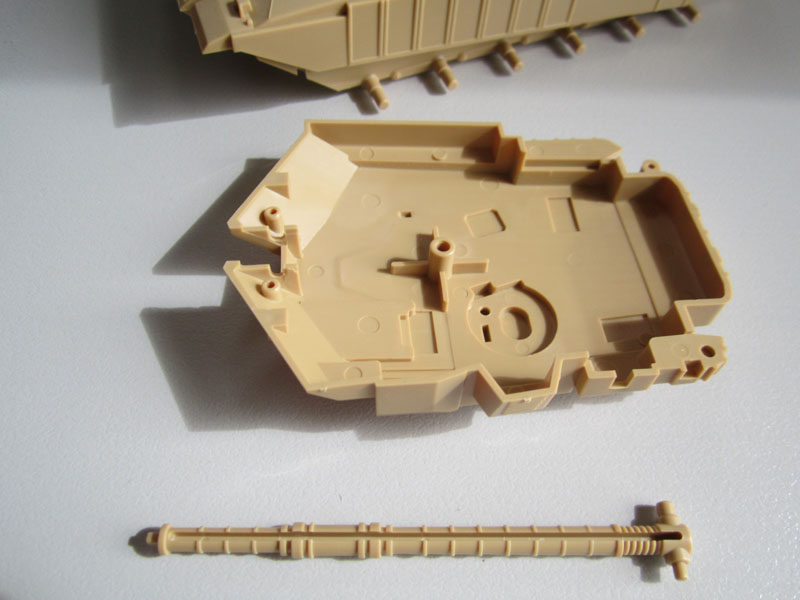
A very detailed turret underside? Perhaps not! (Yeah, I thought there was a piece missing, too!)

As Academy is clearly a budget-ended model company, you can see how they subscribe to an “out of sight, out of mind model” with the underside of the turret and main gun. Even so this is acceptable for a model to be used in wargaming in my mind, as we tend not to remove the turret unless the model is destroyed, and the underside of the gun really can’t be seen unless you’re looking front-on at tabletop eye level with the gun elevated to maximum.

Given that I’m looking at this kit as something to use/convert for miniatures wargaming, I’d say it will do the job admirably and at a very reasonable price. I’m not going to be doing a Mig Jiminez on it and creating a museum-quality work of art in 1:48 with it, and so if you’re also looking for wargames-friendly models, I’d suggest the Academy line as worth checking out. In the same scale, there’s also an Israeli Merkava, a US M60A1 (Patton), Soviet T-72, German Leopard 2 A5 in the $15 price range, with other tanks (Panthers, Tigers, T-34s, and more) becoming available as the kits go on with motorised elements and a slight price increase going on to $25 and $30+ per kit… I’d have jumped on the T-34s if they were also in the $15 price band, but alas, not! Maybe I’ll buy some M60s next.. then some T-72s! 🙂

Overall, the Challenger is a nicely-detailed kit that looks like it will go together quickly and easily. Certainly for fifteen bucks and free shipping, I found them to be a worthwhile purchase, and no doubt will find them even more worthwhile once they’re assembled, painted and used for something!

Quick edit – 23rd Oct 2015: – For the serious model makers – people from Britmodeller and Armorama, etc. I’d avoid the Academy kits. I’ve got a few others in 1:48, and they’re really not up to the standards that you’ll be looking for. For starter modellers, your kids, and for wargamers like myself where the kits can be “good enough” in terms of accuracy and details – or used for terrain, they’re fine and in fact pretty good value. For serious armour modellers though, these aren’t the tanks you’re looking for.

cheers!
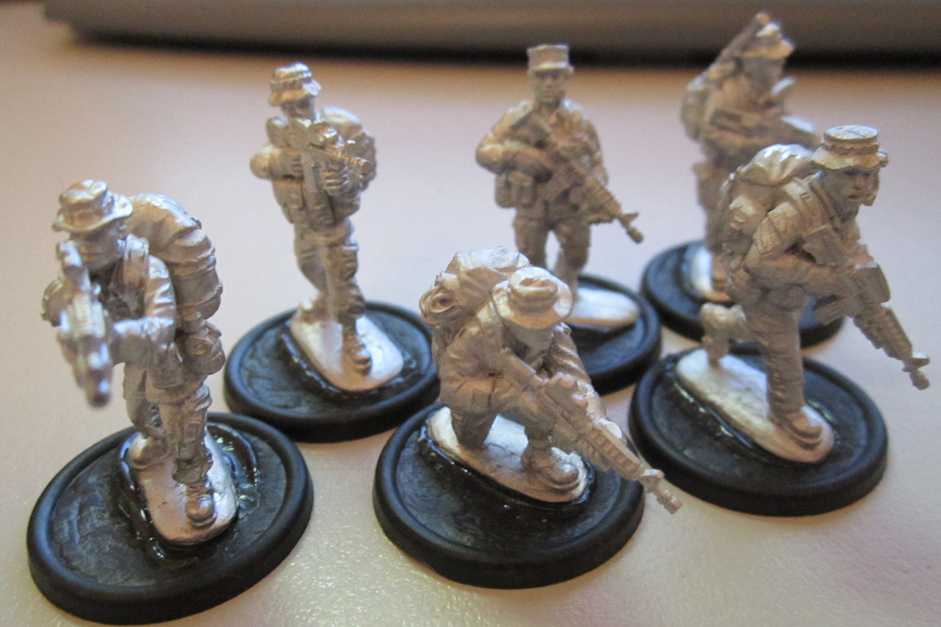
Painting & Modelling Blog: Eureka Miniatures USMC part 1 – Proxie Models bases, Vallejo Acrylic-Polyurethane Primer, Vallejo Sandy Paste

Since I’m quite excited about these new Modern USMC figures from Eureka, I’ve decided to start painting them already – typically figures sit in my “to do” pile for anywhere between months and forever (don’t ask me how many unpainted Space Marines from the 1990’s I still have). Moderns though – I’ve always wanted to get hold of moderns, but until very recently they have always been in 20mm, or quite frankly – not good enough models for me to be willing to spend money on. I guess I’m a bit of a snob in that sense, but I grew up with Games Workshop sculpts by Jes Goodwin, the Perry Twins, Kev Adams, Mark Copplestone et al, and later on, figures by the Rackham crew, so seeing figures that looked mostly-smushed or not much better than what I could sculpt myself never did it for me.

As well as a follow-up order with Eureka, I’m also planning to pick up pretty much the entire Modern (Western) range from Empress Miniatures very soon – US Forces and Brits. Again, they look very nice, and should add some additional variety to my modern forces.

I started by basing them on 25mm rounds from Proxie Models. A couple of months ago I ordered a ton of bases ($70 worth) from Ken after some recommendations on Dakka, and they are both dirt cheap and excellent quality. I’m tempted to order more just to have a healthy stockpile for the future.

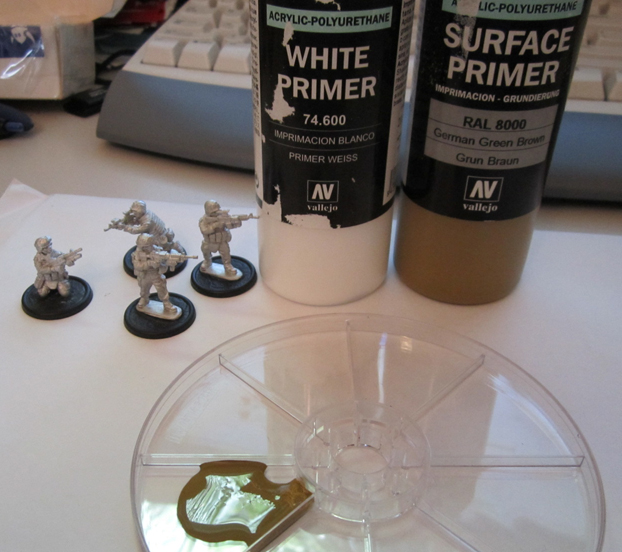
One of the new things I’ve decided to try with these was the coloured primers I picked up a couple of months ago from Vallejo. These are the new Acrylic-Polyurethane primers. I picked up the full range of 10 colours in the 200ml bottles, in the hope that I’ll never need to buy the stuff again. I’ve heard people talk about how they’re wonderful for plastics but not so great for metals. Well, they applied very nicely and smoothly to my Marines using a 3/16 flat brush, and once dry, the paint has indeed “shrunk” into the detail, leaving them unobscured.

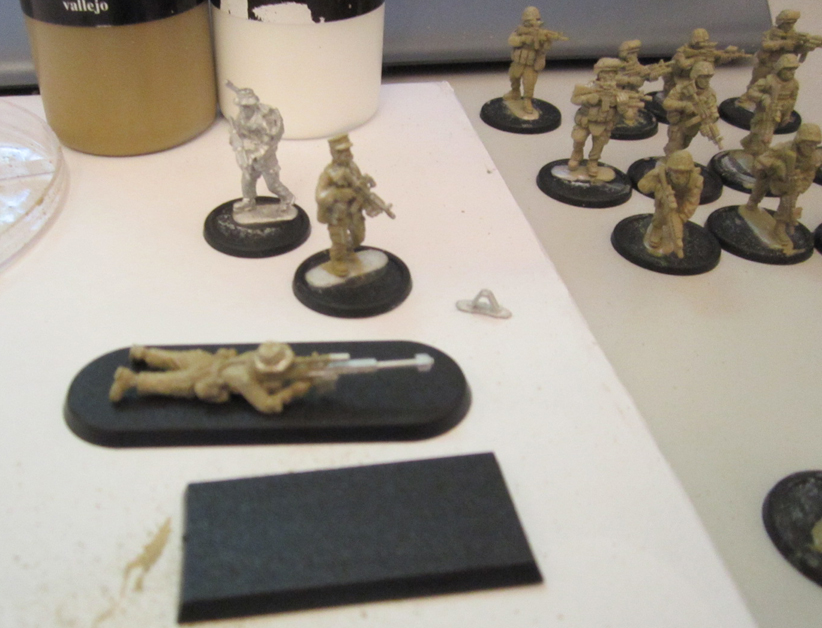
I have to say, using coloured primer has been a little hard to get my head around – after more than a decade of using a spray can, using a brush to apply coloured paint just seemed wrong in some way – like I’ve started basecoating without undercoating. The Vallejo primer was very smooth in it’s application, and feels quite nice on the models. I used a 2:1 mixture of RAL8000 German Green Brown with White, as I figured if I’m going to use coloured primer I may as well lighten it to be a bit closer to what will be my main base colour.

In all, it turned out well. After drying I’ve spotted a few places on a number of the figures that I’ll need to touch up. After that, basecoats!

The one thing I’m not sure about is the basing of the sniper. He’s too big for a 40mm round, which leaves me with a choice of the two 40k cavalry bases. The WFB square one leaves his rifle overhanging, which means I could more easily position him as shooting out of a window etc, but the round one will better protect the rifle from damage in storage, transport and play. I can also do a little more on the base by adding some rocks and such, though not to the extent of making a mini-diorama, as I feel they detract from models when used as gaming pieces. I also prefer round(ed) bases. A 60mm round would be overkill, I feel. I’m using another figure as a spotter, but I prefer to have 2-man teams based separately as it offers more flexibility on the tabletop and in storage.

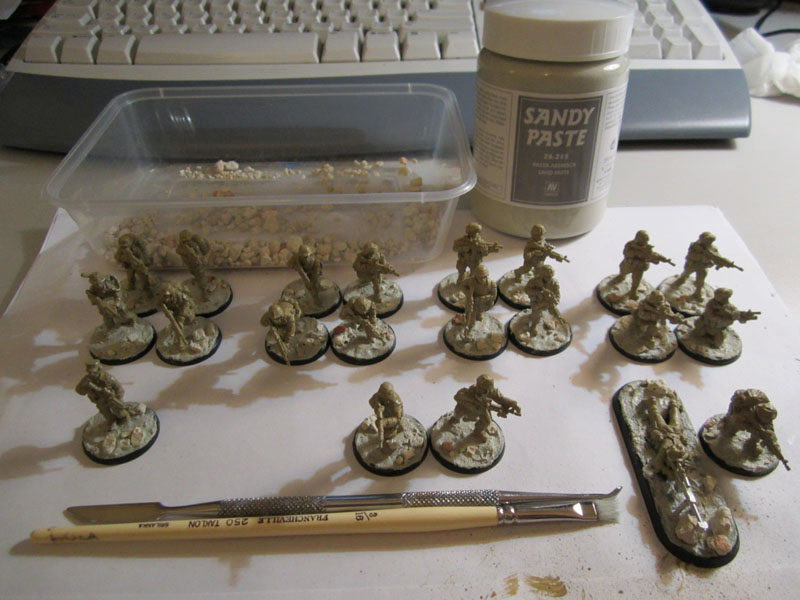
In the end, I went for the rounded base for the extra protection. Since with these figures I’ve decided that I want to try a bunch of new materials and techniques, I found the Vallejo Sandy Paste that I purchased awhile back, and decided to ladle it onto their bases. I haven’t used this kind of material for basing before, and have only used non-textured acrylic pastes for adding bulk, such as on my FoW DAK, and then going over the top with regular fine sand. Since the Proxie bases have a slight indent and the Eureka figures have an integral metal base, I used the paste to level out the tops of the bases, using a sculpting tool to apply it, and the same brush as I used for the primer to wipe it off when I got too much on their boots.

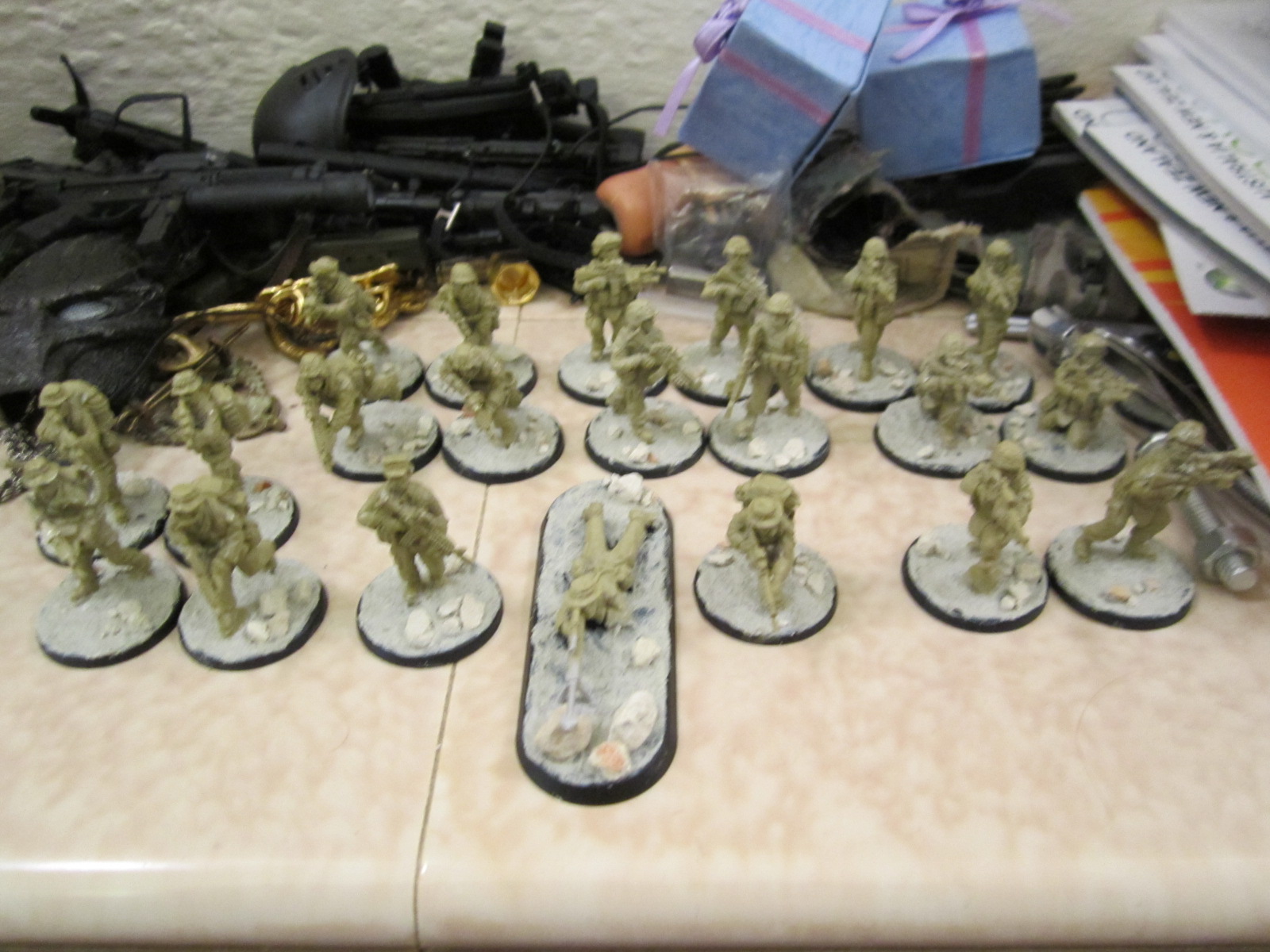
Verdict – the paste is way too fiddly to use on something like a 40k army or a full historical army, but should be fine on a smaller skirmish force like these ones. Finally, I added some kitty litter to the bases to add some texture as rocks. I’m going for a more rural Afghan-style base, rather than simply sand. I added a couple of the larger stones to the front of the sniper, to make it look like he’s found a spot that affords him a little bit of visual cover, while still keeping him in theme with the rest of the figures (so no bricks or ruins).

Now I just need to touch up the primer where it got rubbed off during the basing, and the actual painting can begin!